News Details
From rights to justice: the women advancing women’s rights in West and Central Africa
Every 8 March, International Women’s Day reminds us of an essential reality: if this day is still necessary, it is because women’s rights remain fragile. They only become real when they are defended, explained, and made tangible in the spaces where life truly unfolds.
In West and Central Africa, these spaces are many: a classroom, an inclusive school, a community, or a digital tool providing access to reliable information. Through UNESCO’s Our Rights, Our Lives, Our Future (O3) programme, women from different walks of life are helping to advance justice for women and girls every day. Young leaders, teachers, and religious and community actors are turning rights into protection, confidence, dialogue, and agency.
In Mopti, Mali, 15-year-old Safiatou saw a displaced classmate suddenly disappear from school. At first, she thought her family had once again been forced to flee. At that time, she herself was navigating incomplete information and many misconceptions about sexual and reproductive health. Then, in 2024, a teacher recently strengthened with UNESCO support through the O3 programme addressed these issues in class in a clear, direct, and useful way. That lesson was a turning point. Safiatou later learned that her classmate had left school following an early pregnancy.
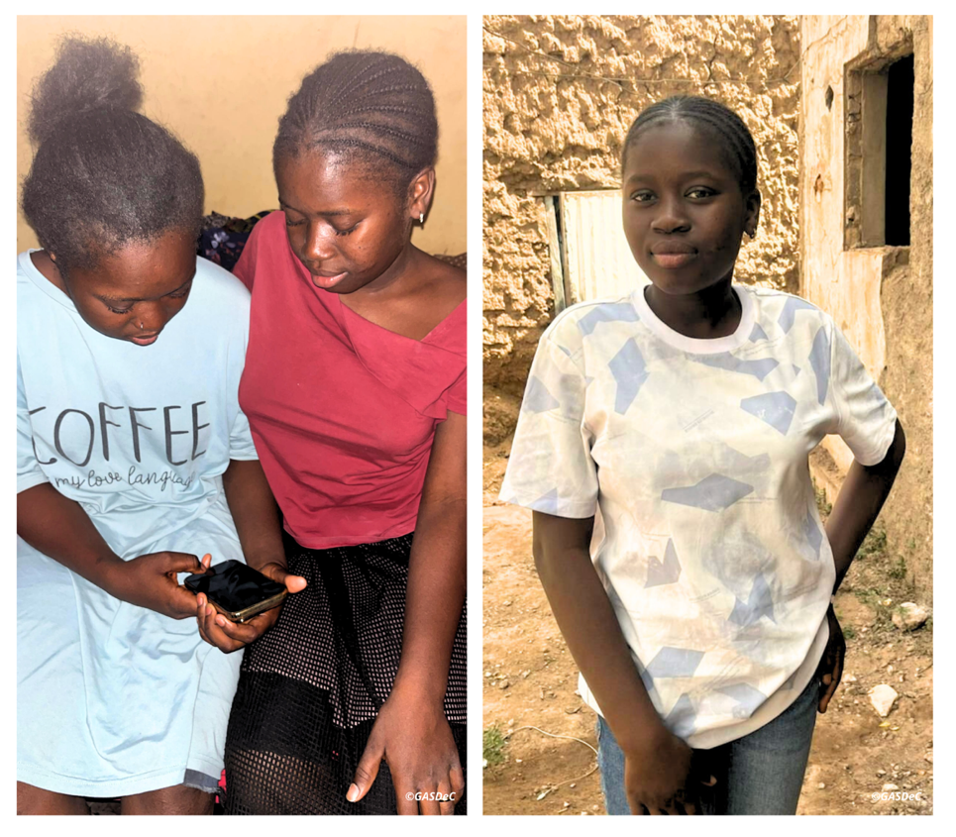
©GASDeC - Safiatou helps a peer use the Hello Ado app to find nearby family planning services and trusted information.
Instead of remaining a bystander, she chose to act. Together with other girls, she co-created a school health committee to offer adolescents, especially those in displacement situations, a space for listening, exchange, and referral to appropriate services. To avoid spreading rumours, she also relies on the Hello Ado app to verify information before sharing it.
“I think the government and its partners should scale up this education in all schools across Mali. It simply saves the lives of adolescent girls and young people in conflict-affected regions.”
In Ghana, at the Koforidua School for the Deaf, Gladys Ayaw Oduro embodies that same determination to make rights a concrete reality. She teaches sexual and reproductive health to learners with disabilities, a group particularly exposed to violence, exploitation, and unintended pregnancies. Thanks to training supported through the O3 programme, she now addresses adolescent health, gender-based violence, and the prevention of early pregnancy with greater confidence.
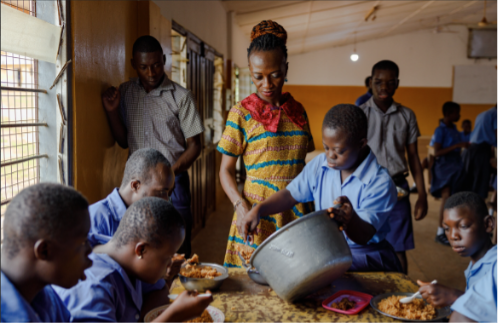
© UNESCO/Misper Apawu
In her work, Gladys prioritises practical methods, such as role play, to help students recognise risk, set boundaries, and ask for help. In an environment where silence can heighten vulnerability, this pedagogy becomes a real tool for protection. Her journey highlights a truth that is still too often overlooked: justice for women and girls cannot be real unless it fully includes persons with disabilities. When education is adapted, inclusive, and practical, it does not merely transmit knowledge; it also builds lasting protection.
In Benin, Marlène Juanita Quenum reminds us that another space of transformation remains essential: the community. In her view, religious leaders have a strategic role to play in the sustainable promotion of health, gender equality, and education. Their strength lies in their social credibility, their closeness to families, and their ability to shift certain cultural resistances.
“We have very strong social credibility. We have direct access to the community through our sermons and worship. We also have a very strong ability to overcome resistance and foster cultural anchoring.”
For Marlène Juanita Quenum, when religious leaders are trained, involved in public policy, and equipped with evidence-based messages, they become major allies in supporting lasting change. They can help open dialogue on still-sensitive issues, strengthen social acceptance of health education, and advance respect for human rights, confidentiality, and gender equality.
Safiatou, Gladys, and Marlène Juanita Quenum are not the same age, do not play the same role, and do not work in the same setting. Yet their paths converge on one fundamental point: women’s rights move forward when they are carried by women who make them tangible where life actually happens.
At school, in communities, and through access to reliable information, they show that justice is not limited to principles. It is built through words that liberate, lessons that protect, collective action that restores confidence, and local actors who can help shift norms. On this International Women’s Day, their voices remind us that defending women’s rights also means creating, every day, the conditions for those rights to become real.